Last Updated: November 23, 2025
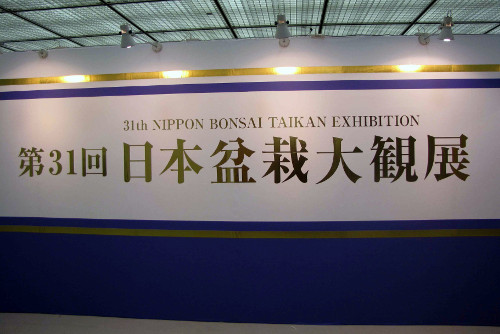
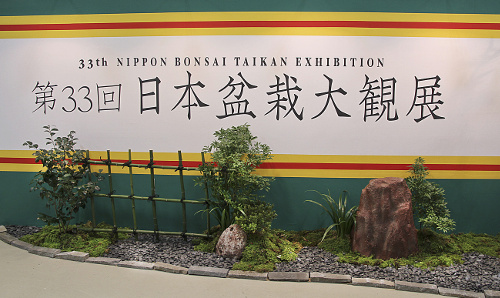
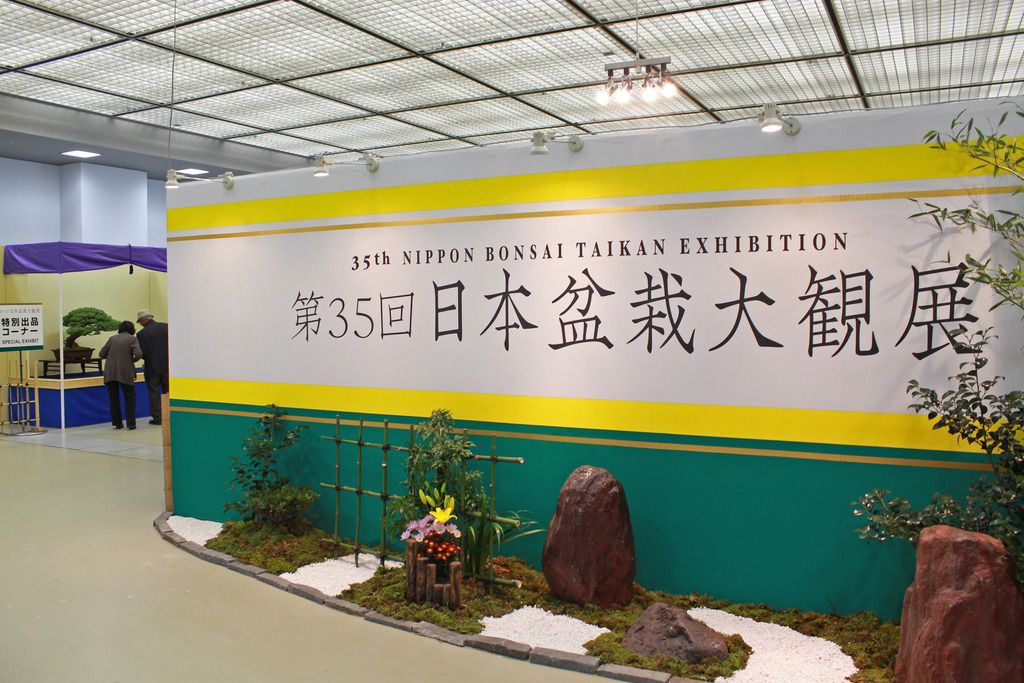
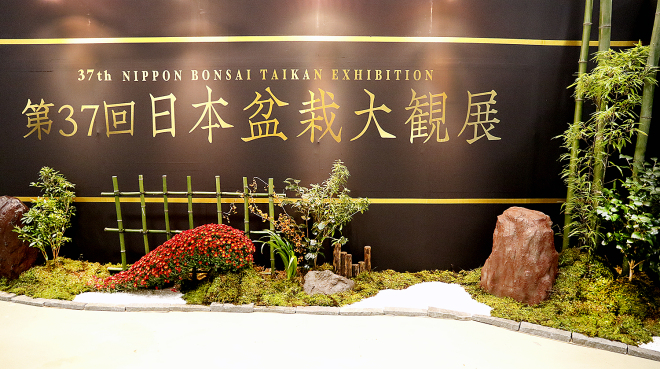
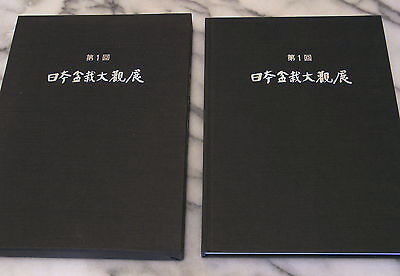
The Taikan-ten is the largest and highest level of bonsai exhibition in Western Japan and the second largest show in all of Japan following Tokyo's Kokufu-ten. (The Meifu-ten is the second oldest and third largest exhibition.) The Taikan-ten is a four-day national exhibit of bonsai which is the largest and best of the late season shows. Taking place at the peak of fall color, the trees shown include deciduous, fruiting, and evergreen bonsai, and satsuki azaleas. This is another of the exhibits that is held for hobbyists, although many of the better trees have been styled and maintained by bonsai professionals. The quality of bonsai selected for the exhibition is not as high as for the Kokufu Bonsai Exhibition in February. But rather, professional bonsai artists select trees from their clients, and both professionals and amateurs are able to display in the same hall. This means you can have an Important Bonsai Masterpiece or kicho bonsai displayed next to a tree which has perhaps never before been seen by the public. Kokufu winners from earlier in the year can also now be seen. All entrants must pay to enter their display and the prices are from about ¥55,000 for a place in the common display area to ¥110,000 for the larger alcove-like areas with purple bunting (currently about 351 to 701 USD or 304 to 608 Euro). Rental for one of the special display areas could cost 10,000 USD. Many of the trees are displayed with hanging scrolls and often also a suiseki or companion plant to suggest a scenic view. The Taikan-ten is one of the few traditional public exhibitions that feature bonsai in displays with scrolls and suiseki, although several contemporary displays can be seen here as well. The exhibition space is arranged in a series of parallel rows of tables well spaced apart. For 2023, the exhibition was completely laid out differently and had the entrance moved. Aisles were much more spacious to allow more visitors to appreciate the beauty of each bonsai. All the special displays had black backgrounds around the perimeter of the new layout -- a refreshing surprise. Many years ago this exhibition had yellow, green and blue backgrounds which were difficult to photograph. A few years later some black backgrounds were introduced which were a bit easier to photograph. In 2025 nearly the entire show had matt black backgrounds, but now fluorescent lighting had been added, and the trees were a bit difficult to photograph because of the uneven lighting causing glares. Four rows of the old yellow were still being used. The best of show is awarded the Prime Minister Award, but that is not necessarily given to a tree every year. The judging panel is made up of primarily the heads of the various bonsai organizations: professional, amateur, two shōhin societies and suiseki. Additionally art, media and politically important people are included as judges, and they are sometimes guided by the experts into the fine qualities of bonsai. The exhibition committee pre-select the top three or four trees from the various categories. These pre-selected trees are then placed in long rows, grouped together by their categories to be judged by the panel. On the Thursday afternoon before the start of the week-end opening, the judging takes place. All the bonsai are lined up and the judges were sitting in front in a long row. As each category is announced, a small clipboard and ballot are handed out and then collected after each judge simply puts the tree number on the small piece of paper. There were NO points, just select the best bonsai. Many of the trees are fine wired with a lot of guy wires. Remember, this is not a dog show, it is an art show of the highest caliber. This is how the professional exhibitions are evaluated in Japan, and they invented the bonsai evaluation process. People judging bonsai outside Japan make it more difficult. The best trees are awarded essentially best in class awards such as by size (large, medium and small) and by type (evergreen, deciduous, satsuki, shōhin bonsai, literati, forest plantings, and rock plantings). The suiseki are classified as those in water basins, daiza bases, figure stones, and chrysanthemum stones. However, special awards are also given to those outstanding trees which do not win the "best _________ categories." After judging, many of the award-winning bonsai are displayed in a special area with purple bunting. In 2018 there was a tie between two trees. Instantly, the moderator took the two tree numbers and placed them behind his back and one judge selected a hand, which became the winner. The other tree also received a prize. (Note: the smaller Sakufu-ten -- Creative Bonsai Exhibition -- where professional bonsai growers can exhibit traditional trees under their own names was begun in early January 1975 and is now held in December. Usually no more than 60 trees are in this annual Tokyo display. It also has what is called the "Prime Minister's Award" (announced on the last day of the exhibition), so unless the exhibition is specified in an article, one cannot assume that a "Prime Minister Award" was automatically for a Taikan-ten entry.) The Nippon Bonsai Association, the Taikan-ten Organizing Committee, the City of Kyoto, and the local Kyoto Television and Newspaper companies jointly sponsor this exhibit. It has gained popularity and notice in part due to the widely publicized bonsai contest sponsored by Japan Airlines (JAL). This is a worldwide contest where individuals submit photographs of their best bonsai for judging by an expert panel. The winners of this annual contest are flown to Kyoto where the photographs of their prize-winning bonsai are displayed at the Taikan-ten exhibition. Like other major exhibits, a large sales area is present (to help pay the rent and electric bills for the main event) and the organizing committee publishes an annual album of color photos of the plants displayed. These are generally 21 x 29.7 cm in size with 163 pages and about 300 color photographs. Many foreign visitors attend this show, and quite a few go directly to the sales area upon admittance to choose the best trees, pots, and suiseki offered before attending the main exhibition. Because of the increased number of foreigners in 2019, in addition to Japanese language walking tours of the exhibition conducted by Miss Hitomi Kawasaki, a couple of tours were conducted in English by Bill Valavanis. Bill would again do this in 2022, 2023, and 2025. On the show's Sunday afternoon in 2022, the bonsai community, organized by Seiji Morimae, sponsored a charity auction for the people of the Ukraine, which has a sister city relationship with the city of Kyoto. Approximately 75 bonsai, important bonsai masterpieces, suiseki, containers and other art were donated. Mashiko Kimura donated four of his bonsai for the auction including a certificate of authenticity. Perhaps the most valuable bonsai auctioned was a large prize winning multiple trunk Chinese quince which is well-known and also an important bonsai masterpiece.
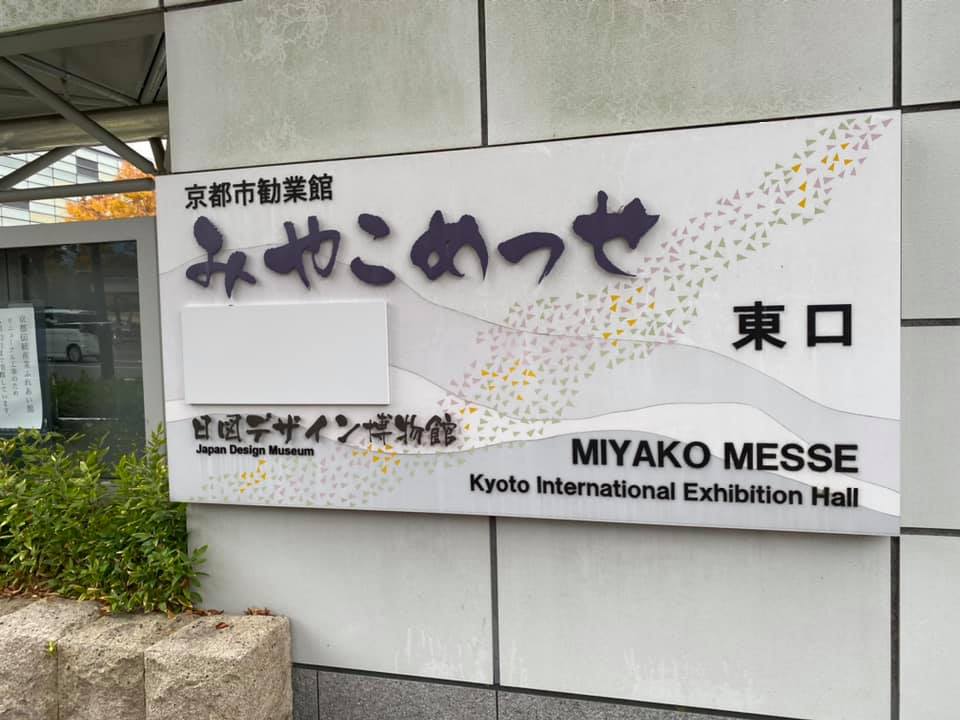
The Taikan-ten is held in the Kyoto International Exhibition Hall, aka Miyako Messe, 9-1 Seishoji-cho, in the Okazaki area of eastern Kyoto. This is just down the street from the Heian Shrine. Miyako Messe is a complex of halls that includes the Japan Design Museum. The Museum of Traditional Crafts is located in the basement and houses displays and videos of Kyoto's crafts and craftsmen. The Taikan-ten admission price is ¥1500 yen -- previously ¥1000 --- (currently about 9.56 USD or 8.30 Euro), early bird or group (20+ people) price is ¥1300 -- previously ¥900 -- and elementary school students and younger still are free. (The first few Taikan-Ten were held at the Kyoto Kangyo City Hall with an admission the equivalent of $2.50 USD.)
(With a similar admission schedule, the Gafu-ten Shōhin Bonsai Exhibition, Japan's premier exhibit of trees 20 cm/<8" high or smaller, is held at Miyako Messe in early January by the All Japan Shōhin Bonsai Association. The 44th Gafu-ten took place in 2019, thus the exhibitions were begun in 1976. Shōhin display entails complex relationships among all of the trees in the composition arising from the convention of providing contrast in a display such as from having different tree species or styles, pot colors or sizes or stands together.)
NOTES: "The Best Bonsai and Suiseki Exhibits in Japan" by Dr. Thomas S. Elias, originally published in Bonsai, BCI, May/June 2002; "Bonsai Exhibitions in Japan, August 31, 2018; "The Blanton Collection: Eagle's Landing, Juniperus scopulorum," Bonsai, BCI, September 2016; "Autumn 2014 Japan Bonsai Exploration- Part 3" by William N. Valavanis, Nov. 21, 2014; "2015 Autumn Japan Bonsai Exploration- Part 3" by William N. Valavanis, Nov. 21, 2015; "2016 Autumn Japan Bonsai Exploration- Part 4" by William N. Valavanis, Nov. 18, 2016, and Part 5, Nov. 19; "2017 37th Nippon Bonsai Taikan Exhibition Part 1" by William N. Valavanis, Nov. 18, 2017, and Part 2, Nov. 19; "2018 38th Nippon Bonsai Taikan Exhibition Part 2" by William N. Valavanis, Nov. 23, 2018; "2019 39th Nippon Bonsai Taikan Exhibition - Part 1" by William N. Valavanis, Nov. 22, 2019; "Taikan Ten Exhibition 2018," Bonsai Empire; "Tiaken-Ten, Kyoto, Japan 2016," Bonsai Tree; "Post 209 Taikan-ten in Kyoto Japan," Bonsai & Pottery, November 30, 2015; "The Second Grandview Bonsai Exhibition" by William N. Valavanis, International Bonsai, 1983/No. 1, pp. 12-14; "29th Grandview Bonsai Exhibition," International Bonsai, 2010/No. 3, pp. 32-33; "32nd Grandview Bonsai Exhibition," International Bonsai, 2013/No. 3, pp. 37-39; Album specs from Maillot Bonsaï, Bonsai Tonight Online, and Le Jardin du Levant; 31st Taiken-ten entrance image from Taikan-Ten 2011 by Peter Tea Bonsai, Nov. 30, 2011; 33rd Taiken-ten entrance image from Japan International Bonsai Tour Exploration- Autumn 2013, Part 3 by William N. Valavanis, Nov. 21, 2013; 35th Taiken-ten entrance image from "Japan Trip Part 3 [Taikan-Ten]" by Mach5, BonsaiNut, Jan 9 2016; 37th Taiken-ten entrance image from "2017 37th Nippon Bonsai Taikan Exhibition Part 1" by William N. Valavanis, Nov. 18, 2017; No. 1 album image from Bonsai Bücher; "The Miyako Messe Exhibition Hall" in Exploring Kyoto: On Foot in the Ancient Capital by Judith Clancy, pg. 111; Miyako Messe Front Signage image from MarczikaBonsaiStudio; "Japan Trip Part 3 [Taikan-Ten]" by Mach5, BonsaiNut, Jan 9 2016; "2010 Taikan Ten Bonsai Exhibition" by William N. Valavanis, Internet Bonsai Club, November 23, 2010; Per BCI Event Listing for 38th Bonsai Taikan ten Exhibition, Admission is 900 yen, formerly 800. (accessed 03/02/19); Facebook post by William N. Valavanis and Makiko Koba of Hitomi Kawasaki Nov 3, 2019 post of 39th Taikan with English translation. Facebook post by William N. Valavanis, Nov 7, 2022 of 42nd Taikan. "2022 42nd Nippon Bonsai Taikan Exhibition-Part 1" by William N. Valavanis, November 24, 2022, and Part 3, November 27, 2022. Facebook post by Nippon Bonsai Growers Cooperative, Nov 20, 2025 of the 45th Taikan. "2025 45nd Edition of the Japan Bonsai Taikan Exhibition-Part 1" by William N. Valavanis, November 20, 2025, and Part 2, November 22, 2025.
|